Spalling Concrete Repair: Early Warning Signs and Solutions
Identifying the need for spalling concrete repair before the damage becomes severe is a discipline that separates proactive building management from reactive crisis response. In Singapore, where concrete structures face an unrelenting combination of tropical heat, monsoon rains, and salt-laden coastal air, the margin between a minor patch and a major overhaul can be measured in months of inattention.
How Concrete Tells You It Is Failing
Concrete is not a silent material. It communicates its distress through a progression of visible and detectable signs, each one marking a stage in the deterioration process. The challenge for building owners is learning to read these signals before they escalate into costly emergencies.
Stage One: Hairline Cracks
Fine cracks on the concrete surface are often the earliest indicator. While not all cracks signify reinforcement corrosion, those that follow the line of embedded steel bars – typically running horizontally along beams or vertically along columns – deserve immediate attention. These pattern cracks suggest that rust expansion has already begun to stress the concrete cover from within.
Stage Two: Rust Staining
Brown or orange discolouration appearing on the concrete surface, particularly where cracks are present, confirms that water is reaching the reinforcement and carrying dissolved iron oxides to the surface. This is no longer a theoretical risk – active corrosion is underway.
Stage Three: Delamination
At this stage, the bond between the concrete cover and the substrate has broken, though the surface layer may still appear intact. A trained inspector will detect this by tapping the surface with a hammer – delaminated areas produce a distinctly hollow sound compared to the solid ring of intact concrete.
Stage Four: Spalling
The concrete cover cracks, bulges, and eventually falls away, exposing corroded reinforcement beneath. By this point, the damage is advanced and the repair scope is significantly larger than it would have been at earlier stages.
Where to Look First
Certain building elements are more susceptible to spalling than others. Prioritising inspections of these areas maximises the chance of early detection.
- Balcony soffits – Water collects on balcony surfaces and penetrates downward, corroding the reinforcement in the slab soffit below. These areas are often hidden from the occupant’s view.
- Car park soffits – Vehicles bring moisture and contaminants into basement car parks, and poor ventilation keeps humidity levels high.
- External ledges and parapets – These narrow elements have concrete cover on multiple exposed faces, increasing the surface area through which moisture can enter.
- Staircase soffits – Often poorly maintained, stairwell ceilings in older HDB blocks and condominiums are frequent sites of spalling.
- Facade elements – Columns, beams, and wall panels on the building exterior face direct exposure to rain, sun, and wind-driven moisture.
Madam Siti Nurhaliza, a property management executive responsible for three residential developments in Tampines, describes her inspection routine. “Every quarter, our team walks through the common areas with a checklist and a camera,” she says. “We photograph anything that looks different from the previous inspection. This approach has caught several problems early, saving us significant repair costs.”
Solutions Matched to the Damage Stage
The appropriate concrete restoration response depends entirely on how far the deterioration has progressed. Early-stage interventions are simpler, less disruptive, and dramatically more affordable than late-stage repairs.
For hairline cracks without corrosion, crack sealing or injection may be sufficient. Epoxy or polyurethane resin is injected into the crack to restore the concrete’s integrity and prevent water from reaching the reinforcement. This is a preventive measure rather than a structural repair.
For areas showing rust stains and early delamination, localised patch repair is typically the appropriate response. The process involves:
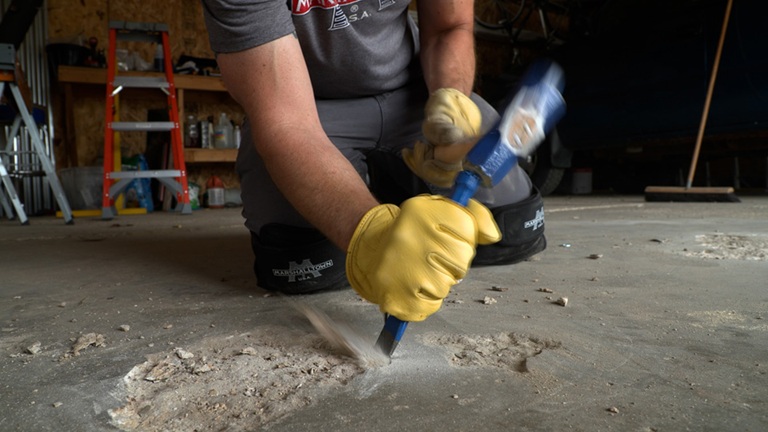
- Removing the damaged concrete to expose the reinforcement
- Cleaning corroded steel to bright metal using mechanical methods
- Applying anti-corrosion treatment to the cleaned reinforcement
- Filling the cavity with polymer-modified repair mortar
- Finishing the surface to match the surrounding concrete
For widespread delamination and active spalling, a more comprehensive structural repair programme is required. This may involve systematic sounding of the entire facade or soffit to map all affected areas, followed by full repair of every identified zone. Surface protection coatings should be applied to the entire treated area to slow future deterioration.
For severe corrosion with significant steel loss, supplementary reinforcement may be necessary. Additional steel bars or carbon fibre reinforcement can be bonded to the existing structure to restore its load-bearing capacity. In extreme cases, building facade repair may involve partial reconstruction of the affected element.
Preventive Measures That Extend Building Life
Prevention is not merely better than cure – it is exponentially cheaper. Several proactive measures can significantly delay the onset of spalling:
- Protective coatings – Anti-carbonation and hydrophobic coatings applied to sound concrete reduce the rate at which carbon dioxide and moisture penetrate the surface
- Waterproofing maintenance – Ensuring that roof, balcony, and bathroom waterproofing systems remain intact prevents water from reaching vulnerable concrete elements
- Drainage management – Clearing blocked drains and ensuring that water flows away from concrete surfaces rather than pooling on them
- Regular inspections – Annual visual surveys and periodic professional condition assessments catch problems at the earliest possible stage
The Economics of Early Action
The financial case for early intervention is compelling. A crack injection treatment that costs a few hundred dollars can prevent a patch repair costing several thousand. A patch repair undertaken promptly can prevent a facade-wide remediation programme costing tens of thousands. Each stage of delay multiplies the cost and complexity of the eventual repair.
Building owners who invest in regular inspection and early-stage spalling concrete repair protect both their occupants and their assets. The craftsmanship of good maintenance lies not in dramatic rescue operations but in quiet, consistent attention – catching problems when they are small, acting before they grow, and preserving the structure that shelters everything within it.


-
Gut Renovation in Astoria NY: The Hidden Costs Nobody Puts in the First Quote
You collected three quotes. They looked reasonable. You signed, the walls came ... -
-
-
-