A Carpet’s Colour Can Change the Cleaning Decision
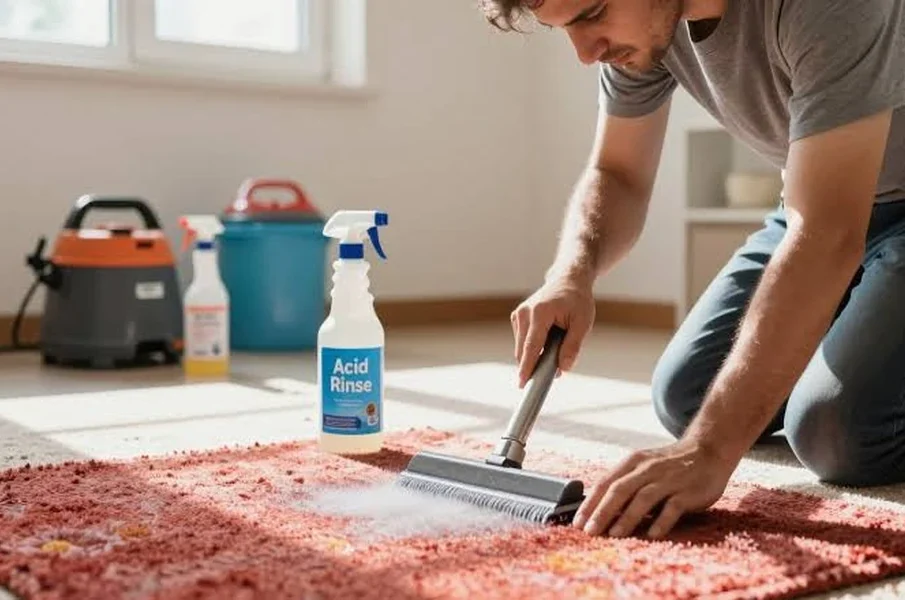
A carpet extractor should fit a cleaning method that the carpet can tolerate. For a patterned floor, an unfamiliar rug or a carpet with previous colour changes, that decision starts before a machine is booked. Identifying the material and checking the permitted treatment can matter more than choosing the largest rental unit available.
Imagine a Markham household preparing to clean a dark patterned carpet in a room that also contains a pale area rug. Both look like textile flooring, and both fit under the same cleaning wand. That does not establish that they can share a cleaning product, water temperature or treatment. The sensible plan may involve cleaning one surface and referring the other to a specialist.
Identify the floor before choosing its treatment
Start with whatever identifies the actual product: an installation invoice, an unused offcut, a label on a rug or the retailer’s record. A description such as soft grey carpet is useful for decorating but weak evidence for selecting a cleaning method. Even a remembered fibre name may leave unanswered questions about the backing, construction and manufacturer’s care requirements.
For a newer installation, request the care document for the specific product rather than relying on a broad brochure for the whole collection. For an older floor, say plainly when the identity is unknown. That uncertainty belongs in the cleaning decision; it should not disappear simply because a rental machine is easy to reserve. A supplier can explain equipment, while a flooring or cleaning specialist may be needed to assess the textile.
Rugs also deserve separate attention. The Carpet and Rug Institute’s care guidance directs readers to manufacturer instructions and recommends professional care for heirloom rugs. A loose rug with decorative fringe should therefore not be added casually to a wall-to-wall carpet job. Its value, construction and treatment history may justify an entirely different approach.
Look at the surrounding materials as well. A rug on a finished wood floor raises a second question: what could reach the surface underneath? The carpet’s permission for a method does not automatically establish that the adjacent finish, underlay or furniture can tolerate the same exposure. Resolve that with the relevant instructions before deciding where the work can happen.
A small test has a specific purpose
The Carpet and Rug Institute advises pretesting a cleaner on a scrap or an inconspicuous area, even for products that have been laboratory tested. The purpose is to identify an unwanted reaction before treating a prominent area. It is not a universal certificate that every part of an old or previously treated carpet will respond identically.
Use the testing method in the carpet and cleaning-product instructions. Improvising a stronger mixture to make the test more convincing defeats its purpose. So does immediately extending treatment across the room before the test can be evaluated as directed. If the instructions are unclear, obtain clarification from the manufacturer or a qualified cleaner rather than inventing a household experiment.
Consider how the test location relates to the visible problem. A sheltered patch inside a closet may have a different history from the bright area beside a window or the strip repeatedly treated near a dining chair. That difference does not make testing pointless; it sets a limit on the conclusion. Share evidence of fading, earlier spot treatments or unusual texture when seeking advice.
A photograph can help describe where a change appeared, especially if it includes a wider view and a close view in similar lighting. It cannot by itself establish whether the change is dirt, colour loss or another alteration. Avoid letting a phone image become permission to apply a more aggressive product. The right response to uncertainty may be examination of the material.
Match the machine to an approved process
For local equipment research, Drying Equipment’s Markham extractor page identifies a carpet water extractor rental option. It is a starting point for discussing equipment suitability and current arrangements. The existence of a rental listing does not establish colourfastness, approve a cleaning chemical or replace the flooring manufacturer’s directions.
Once the permitted cleaning method is clear, the equipment discussion becomes more useful. Explain the flooring type, the approved product and the area involved. Ask whether the proposed extractor and attachment suit that process, and request the operating instructions for the actual machine. A general promise that a machine cleans carpets is not an answer about one particular carpet.
Keep the equipment and solution decisions connected. Buying a product because its bottle says carpet cleaner does not prove it belongs in the rented machine. Equally, a product permitted in the machine may not be appropriate for the carpet. Both sets of instructions must fit. If they conflict, do not try to settle the conflict by using an arbitrary dilution.
Discuss the operator’s limits too. Someone comfortable cleaning an ordinary family-room carpet may reasonably decline a delicate rug or an area with uncertain colour changes. That is a scope decision, not an admission that the whole project has failed. Renting equipment for the straightforward portion and arranging specialist care elsewhere can be a coherent plan.
Preserve the option to stop
Decide in advance what would make the work pause. Unexpected colour transfer, a change in texture or a result that differs from the approved test should prompt a return to the instructions and appropriate professional advice. Continuing to make passes because the rental period is running out can turn a limited concern into a much larger one.
Do not confuse improvement in one visible mark with success across the whole material. A lighter patch may look cleaner while still requiring explanation. Evaluate the result under consistent conditions and after the prescribed drying period, without promising a particular finish. Some marks or changes will not respond to routine extraction, regardless of how carefully the machine is operated.
There is a useful economy in defining the job narrowly. A confirmed carpet, an approved treatment and a suitable extractor create a manageable task. An unidentified rug added at the last moment introduces a different problem. Leaving that item untouched until its care requirements are known preserves both the material and the ability to choose a better method later.


-
Gut Renovation in Astoria NY: The Hidden Costs Nobody Puts in the First Quote
You collected three quotes. They looked reasonable. You signed, the walls came ... -
-
-
-