Surface Mounted Pumps vs Submersible Pumps: Which Is Right for Your Application?
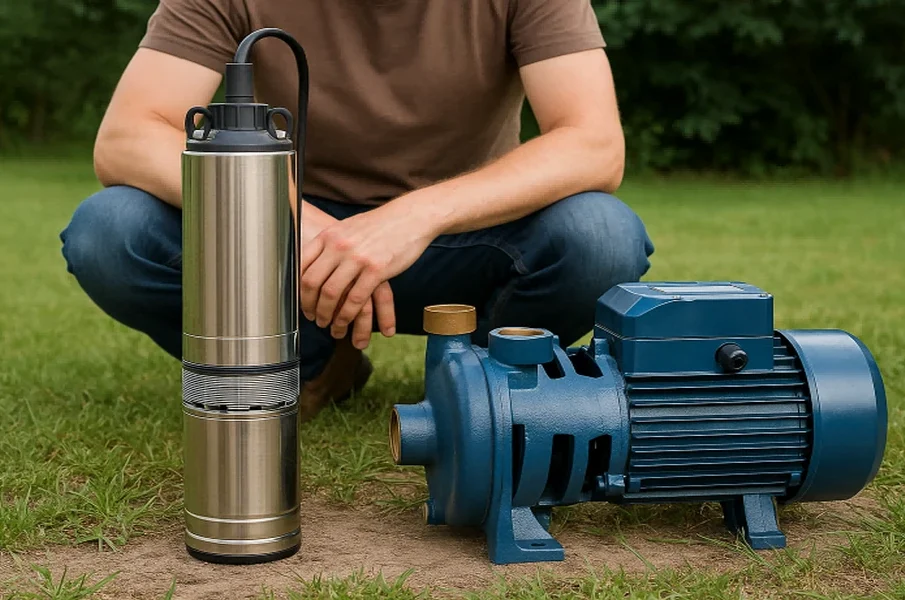
The choice between a surface mounted pump and a submersible pump is one of the first and most consequential decisions in any water supply or transfer project. Both types move water from a source to a delivery point, but they do so in fundamentally different ways that suit them to different applications, installation conditions, and maintenance requirements.
Choosing the wrong format for a given application creates avoidable problems: a surface pump that cannot lift water from sufficient depth, a submersible installed in a location that makes servicing impossible, or a pump that works initially but proves impractical to maintain over its service life.
This guide explains the key differences between the two formats and the factors that determine which is right for a specific application.
How Each Type Works
A surface mounted pump sits above the water source and draws water up to itself through a suction pipe, then pushes it onward to the delivery point. The pump and motor are accessible at surface level for inspection and maintenance. The fundamental limitation of this format is suction lift: a surface pump can only draw water from a limited depth below its own position, typically a maximum of seven to eight metres under ideal conditions, and considerably less in practice as pipe length, diameter, and friction losses reduce the effective suction head available.
A submersible pump is positioned underwater, either in a borehole, well, sump, pond, or open water source. Rather than drawing water upward through suction, it pushes water upward through a rising main or discharge pipe. This push action is far more efficient than suction lift and allows water to be delivered from depths of tens or hundreds of metres. The trade-off is that the pump is not accessible for routine inspection and must be pulled from the installation for any maintenance or replacement.
When a Surface Mounted Pump Is the Right Choice
Surface mounted pumps are the appropriate specification where the water source is within the suction lift capability of the pump, where accessibility for maintenance is a priority, and where the installation environment permits the pump to be housed in a dry, accessible location. Common applications include:
- Boosting mains water pressure in domestic and commercial properties where supply pressure is inadequate
- Drawing water from shallow wells, open tanks, rivers, or lakes where the source is within the pump’s suction range
- Irrigation supply from above-ground storage tanks or header tanks
- Industrial process water transfer where the pump needs to be accessible for frequent adjustment or maintenance
- Pool and spa circulation where the pump is housed in a plant room adjacent to the pool
The key advantage of a surface pump in these applications is maintainability. The pump can be inspected, serviced, and replaced without specialised lifting equipment or significant access work. A range of surface mounted pumps covering domestic, commercial, and agricultural duties is available from UK specialists across a wide range of flow rates and pressure outputs.
When a Submersible Pump Is the Right Choice
Submersible pumps are the correct specification wherever the water source is deeper than the suction lift capability of a surface pump, wherever the pump must be installed in a confined borehole or narrow well casing, or wherever the noise and space requirements of a surface pump installation are undesirable. Common applications include:
- Borehole water supply where the water table is more than seven to eight metres below ground
- Deep well water extraction for domestic, agricultural, and irrigation supply
- Sump and pit dewatering where the pump must operate fully submerged in the water being pumped
- Pond and water feature circulation where a silent, out of sight pump is preferred
- Sewage and drainage lifting stations where the pump handles waste water in a sealed chamber
For borehole applications in particular, a submersible pump is not just preferable but the only practical option in most UK installations. Domestic boreholes are typically drilled to depths of 30 to 100 metres or more, far beyond the reach of any surface pump’s suction capability. Specialist borehole and well pumps in 3 inch and 4 inch formats are available to match the casing diameter of standard UK domestic and agricultural borehole installations.
Key Practical Differences
Beyond the fundamental operating difference, several practical factors influence the choice between formats in borderline applications where either type could theoretically work:
- Maintenance access: surface pumps can be inspected and serviced without pulling the pump; submersible pumps require removal from the installation for any maintenance, which adds cost and complexity
- Noise: surface pumps produce audible motor noise that must be considered in residential and noise sensitive environments; submersibles are silent in operation as the surrounding water absorbs motor sound
- Priming: surface pumps must be primed before starting and will not run dry without damage; submersibles are immersed in water and require no priming
- Energy efficiency: submersible pumps are generally more energy efficient for equivalent outputs as they do not experience the losses associated with suction lift
Frequently Asked Questions
Can a surface pump be used for a borehole?
Only if the water table is within seven to eight metres of the surface; for deeper boreholes a submersible pump is the only viable specification, as the suction lift limitation of a surface pump prevents it from drawing water from greater depths.
Which type of pump lasts longer?
Both types can provide long service lives when correctly specified and maintained; submersibles in clean water applications often achieve ten to twenty years of service, while surface pumps benefit from easier maintenance access that allows issues to be caught and resolved earlier.
Can a submersible pump run dry?
Most submersible pumps are cooled by the water flowing through them and will overheat rapidly if run dry; dry run protection devices that shut the pump down before the water level drops to a dangerous point are strongly recommended for any submersible installation.
Is a surface pump cheaper to install than a submersible?
Surface pump installations are typically less expensive initially as the pump is accessible and the installation straightforward; submersible installations involve the cost of lowering the pump and rising main into the borehole or sump, which adds to installation complexity.
Final Thoughts
The choice between surface mounted and submersible pumps is primarily determined by the depth of the water source and the maintenance access requirements of the installation. For shallow sources within suction range, surface pumps offer simplicity and easy serviceability. For deep boreholes, confined sumps, and silent operation requirements, submersibles are the correct and often only practical specification.
Getting this fundamental format decision right before comparing specific models ensures the pump selected can actually do the job required. Specialist suppliers of submersible and surface mounted pumps carry both formats across all principal applications and can advise on the right choice for specific installation conditions.



-
Surface Mounted Pumps vs Submersible Pumps: Which Is Right for Your Application?
The choice between a surface mounted pump and a submersible pump is ... -
-
-
-